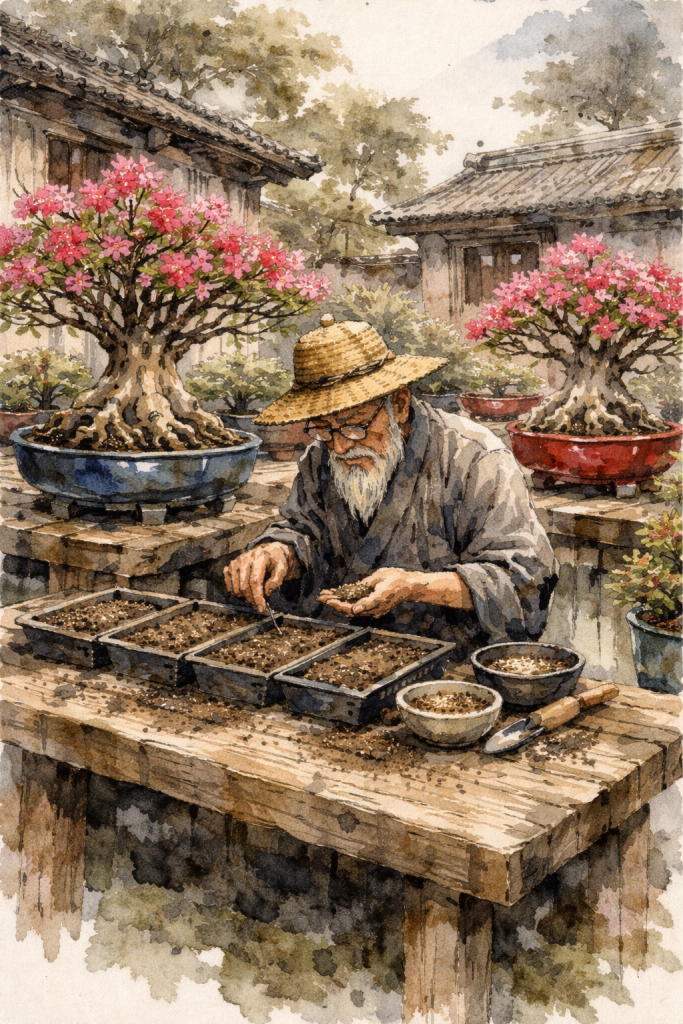
The Art of Adenium Propagation
Welcome to the technical foundation of desert rose cultivation—where precision meets patience, and methodology determines success.
Propagation represents the most critical juncture in the Adenium lifecycle. Whether you’re establishing genetics from seed, perpetuating exceptional cultivars through cuttings, or exploring the refinement of grafting techniques, your approach during these early stages will fundamentally influence plant architecture, caudex development, and long-term vigor. This is where collectors separate themselves from casual growers.
The propagation methods detailed here draw from both traditional horticultural science and contemporary understanding of Adenium physiology. Each technique—seed germination, vegetative propagation, and grafting—demands distinct environmental parameters, substrate compositions, and timing considerations. Success rates aren’t determined by luck or intuition; they’re the direct result of understanding dormancy requirements, optimal temperature ranges, moisture gradients, and the specific cellular processes occurring at each developmental stage.
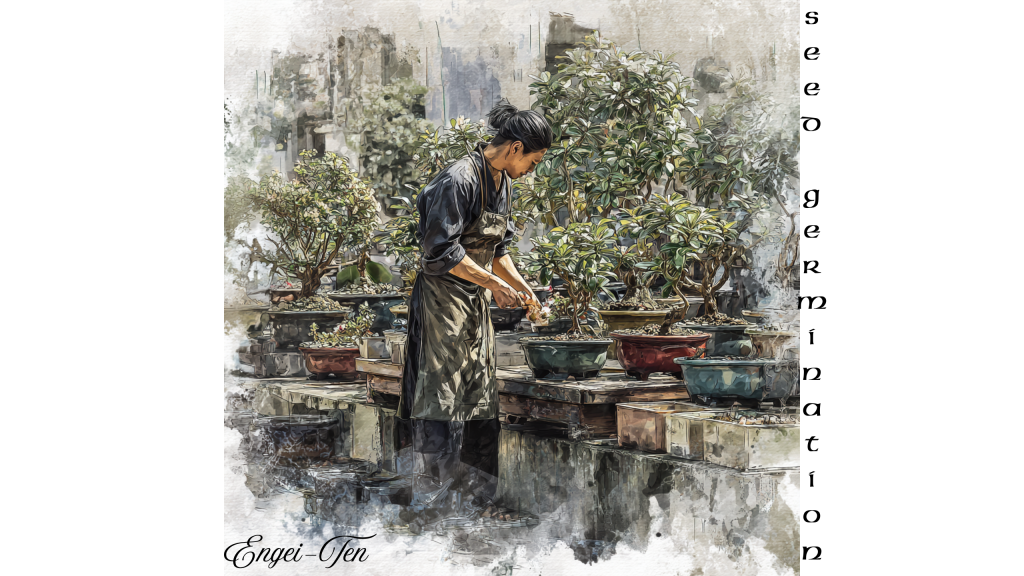
Seed propagation offers genetic diversity and the satisfaction of developing superior caudex formation from inception. However, germination protocols vary significantly across Adenium species and even between seed lots from different regions. Factors such as seed preparation, ideal germination temperatures (typically 80-90°F for most cultivars), moisture management during the critical 48-96 hour activation window, and proper hardening-off procedures all contribute to establishing robust seedlings with strong root systems.
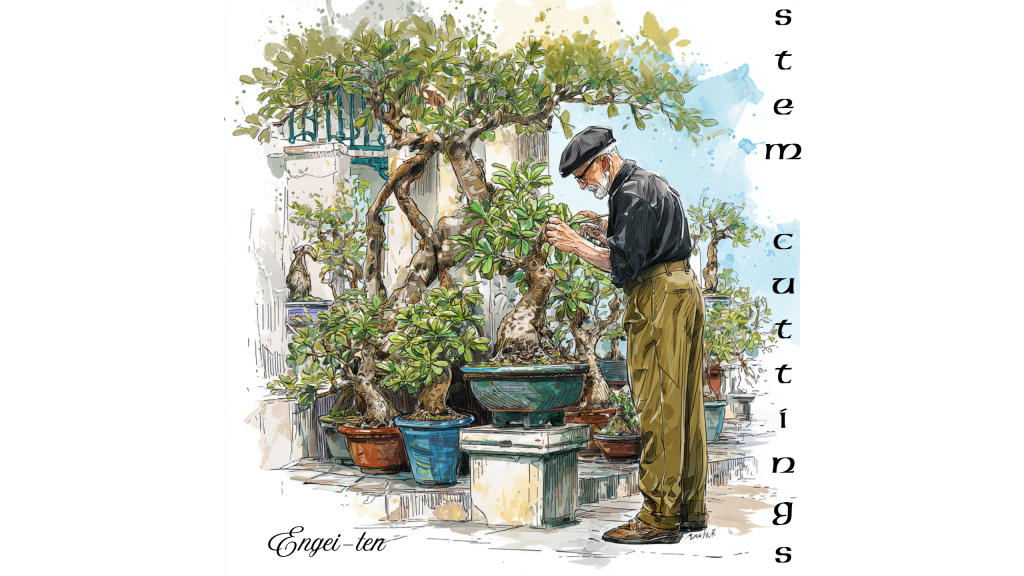
Vegetative propagation through stem cuttings allows precise replication of desired phenotypes—essential when you’ve identified exceptional flowering characteristics, growth habits, or disease resistance. Yet cutting propagation presents unique challenges with Adenium due to their succulent nature and susceptibility to rot. Understanding callus formation, rooting hormone application, substrate porosity, and the delicate balance between adequate moisture and fungal prevention becomes paramount.
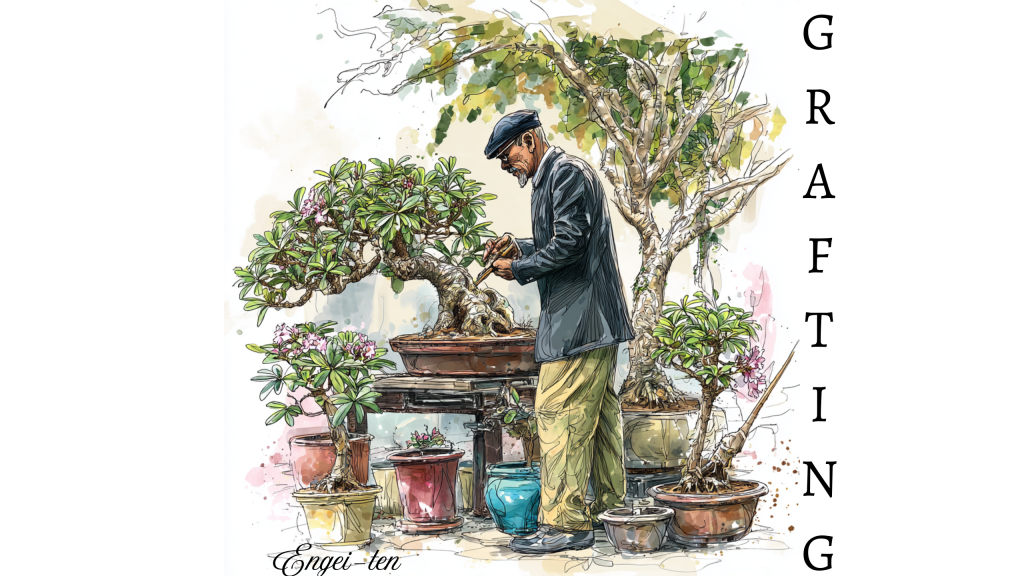
Grafting represents the most advanced propagation technique, enabling collectors to combine the robust root systems of vigorous rootstock with the desirable characteristics of ornamental scions. Side-veneer grafts, approach grafts, and cleft grafts each serve specific purposes in Adenium cultivation, though success depends entirely on cambial alignment, environmental control during the healing period, and post-graft management.
This knowledge base provides detailed protocols for each propagation method, addressing the technical variables that influence outcomes. You’ll find substrate formulations with specific particle size recommendations, temperature and humidity parameters backed by physiological rationale, troubleshooting guides for common failure points, and advanced techniques for maximizing success rates with difficult-to-propagate cultivars.
Proper propagation technique establishes the foundation for everything that follows. A seedling germinated under optimal conditions, a cutting rooted with precision, or a graft executed with technical mastery—these early interventions echo throughout the plant’s entire life.
The following sections will equip you with the methodology to propagate Adenium with consistency and confidence.